
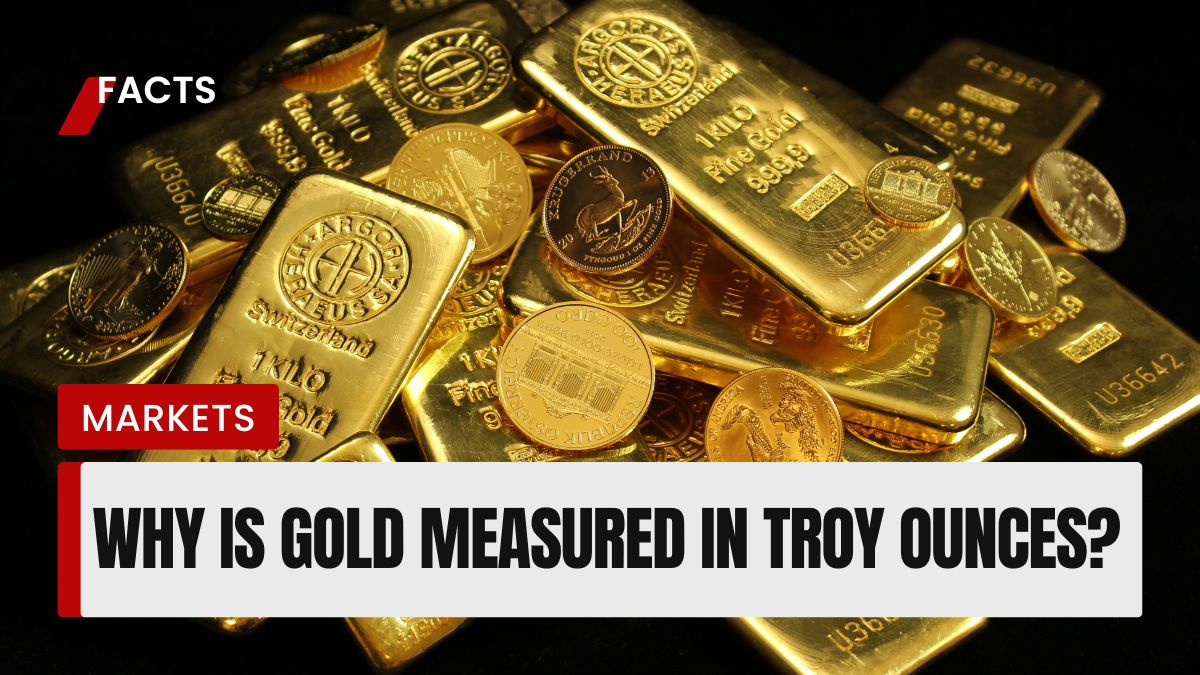
If you’ve ever looked at the price of gold or read about bullion coins, you’ve probably noticed that gold is measured in troy ounces rather than the regular ounces used in everyday life. This often surprises first-time readers because most people are familiar with ounces used for food, household products, or shipping.
The answer dates back hundreds of years and has its roots in medieval trade, long before modern financial markets existed. Even today, the troy ounce remains the internationally accepted standard for measuring gold, silver, platinum, and palladium
Troy Ounce
A troy ounce is a unit of weight specifically used for precious metals. One troy ounce equals 31.1035 grams, making it slightly heavier than the regular ounce used in everyday measurements.
For comparison:
| Measurement | Weight |
|---|---|
| Troy Ounce | 31.1035 grams |
| Regular (Avoirdupois) Ounce | 28.3495 grams |
Although the difference is only a few grams, using the correct measurement is important because precious metals are traded globally based on the troy ounce.
Where Did the Troy Ounce Come From?
The troy ounce traces its history to the medieval trading city of Troyes in France. During the Middle Ages, Troyes was an important commercial center where merchants from different regions met to buy and sell valuable goods.
To make trade more consistent, merchants adopted a standardized system of weights. Over time, this system became associated with the city and eventually evolved into what is now known as the troy weight system.
As international trade expanded, precious metals continued to be measured using this standard because it provided consistency across markets.
Why Isn’t Gold Measured in Regular Ounces?
Most everyday products use the avoirdupois system, which is commonly used in countries like the United States for food, parcels, and consumer goods.
Precious metals are different because they have traditionally been traded internationally. Using a separate and universally recognized standard helps prevent confusion and ensures that buyers, sellers, refiners, and mints are all referring to the same unit of weight.
Whether someone purchases a gold coin in the United States, Canada, Australia, or Europe, the metal content is generally expressed in troy ounces.
Which Precious Metals Use Troy Ounces?
The troy ounce is not used only for gold.
It is also the standard measurement for:
- Gold
- Silver
- Platinum
- Palladium
Many well-known bullion products are available in sizes such as:
- 1 Troy Ounce
- 1/2 Troy Ounce
- 1/4 Troy Ounce
- 1/10 Troy Ounce
Larger bullion bars may be measured in grams or kilograms, but their precious metal content can still be converted into troy ounces for international trading purposes.
Quick Guide
Understanding the difference between a troy ounce and a regular ounce helps readers better interpret precious metals information.
For example, when financial news reports the price of gold at a certain value per ounce, it is referring to one troy ounce, not a regular ounce.
Knowing this distinction also makes it easier to understand bullion product descriptions, refinery specifications, and official mint information.
Facts
- A troy ounce is about 10% heavier than a regular ounce.
- The troy weight system has been used for precious metals for hundreds of years.
- International bullion markets continue to use troy ounces as the standard measurement.
- Major government mints identify bullion coin weights using the troy ounce standard.
Misunderstandings
A troy ounce and a regular ounce are the same.
No. A troy ounce weighs 31.1035 grams, while a regular ounce weighs 28.3495 grams.
Only gold is measured in troy ounces.
Gold, silver, platinum, and palladium are all commonly measured using the troy weight system.
Countries use different standards for bullion.
Although countries may use different currencies or measurement systems for everyday goods, the global precious metals industry widely follows the troy ounce standard.
Understanding
A troy ounce is the traditional unit used to measure precious metals. It is slightly heavier than the regular ounce used in everyday life and has remained the international standard because it provides consistency across global precious metals markets.
Key Take Away
The troy ounce has survived centuries of economic change because it offers a common language for measuring precious metals around the world. While most everyday products use regular ounces, precious metals continue to follow this historic standard, allowing miners, refiners, mints, dealers, and investors to work with the same measurement regardless of location.
Understanding this simple difference makes it easier to read market information, compare bullion products, and appreciate the long history behind precious metals trading.